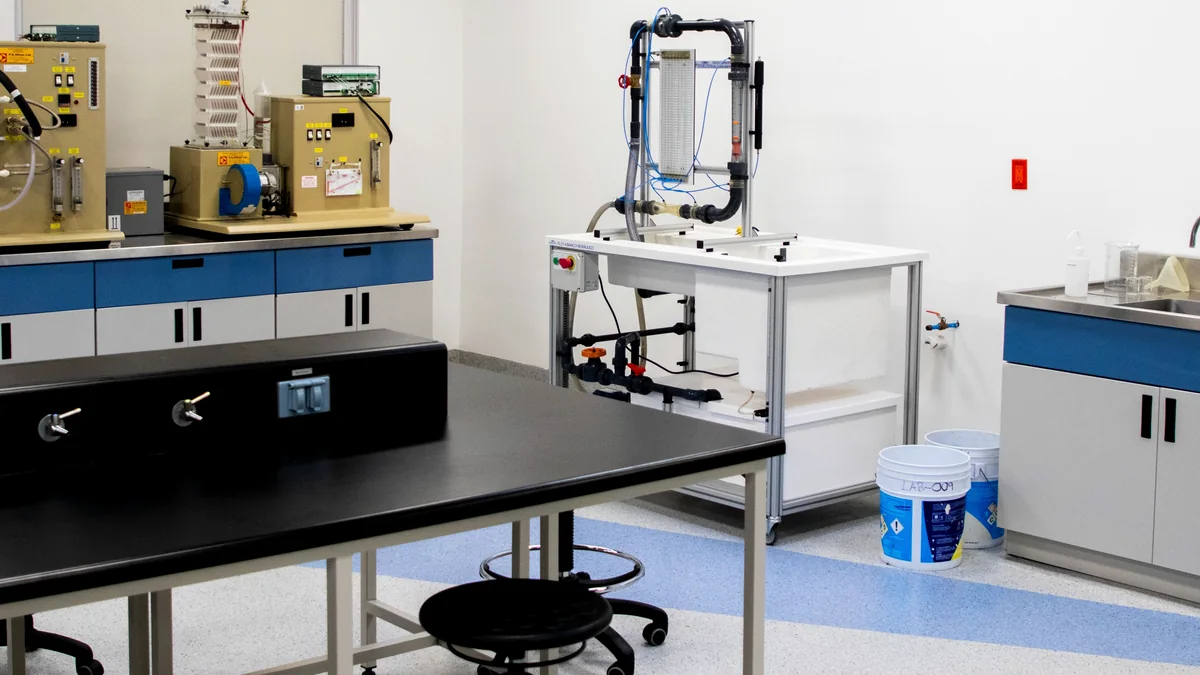
- Storage can reintroduce contamination after treatment.
- Inspect lids, hatches, vents, overflows, screens and structural condition.
- Record cleaning and repairs with dates and photographs.
- Understand whether the tank stores raw or treated water.
Why tanks are critical
A treatment plant can be operating correctly while a poorly protected storage tank allows contamination downstream. The position of the tank in the treatment train therefore matters, as does water turnover: DWI warns against oversized storage that lets water remain static for long periods.
Inspection points
Look for a robust, well-fitting cover; screened vents and overflows; evidence of animal or insect access; standing water; cracks; corrosion; and unsafe access conditions. DWI advises regular inspection of private-supply storage tanks at least annually and preferably every six months.
Cleaning
There is no single cleaning interval for every tank. Use inspection findings, sediment or silt build-up, water-quality evidence, the risk assessment and competent advice to decide when cleaning is needed. Record the method, contractor, isolation arrangements and recommissioning.
Raw vs treated storage
A raw-water tank and a treated-water tank present different risks. Label them clearly on the schematic and in maintenance records.
After work
Hygienic maintenance and appropriate disinfection/recommissioning may be necessary after intrusive work. Follow competent advice.
Practical checklist
- Label every tank.
- Photograph condition inspections.
- Record cleaning and repair dates.
- Record post-work recommissioning evidence.
Frequently asked questions
How often should a private water tank be cleaned?
There is no universal cleaning interval suitable for every system. DWI advises inspecting private-supply storage tanks at least annually and preferably every six months; cleaning should then be driven by condition, sediment build-up, water quality, the risk assessment and competent advice.
Should the overflow be screened?
Yes. DWI guidance says vents, including overflow openings, should be screened to prevent insects and particles entering the stored water. The exact arrangement and materials should still be appropriate for the tank and supply.
Keep the records behind this work together.
Use the free tools or start a 7-day trial to see how sampling, maintenance, actions and documents can sit in one source-to-tap record.
- DWI: Regulation 6 risk assessment
- DWI: Manual on treatment for small water supply systems
- DWI: Water storage
Regulatory guidance can change. Check the current DWI material and your local authority for the position applying to your supply.